Clear Aligners vs. Braces: Which is Right for You?
Having straight teeth is about more than just aesthetics; it is about establishing a balanced bite, making teeth easier to clean, and preventing future jaw issues. If you are planning to straighten your teeth, you have probably wondered: Should I choose clear aligners or traditional braces?
Both options have high success rates, but they differ significantly in terms of appearance, comfort, daily maintenance, and suitability for different dental conditions.
Let’s look at a detailed comparison to help you make an informed decision.
1. Appearance and Discretion
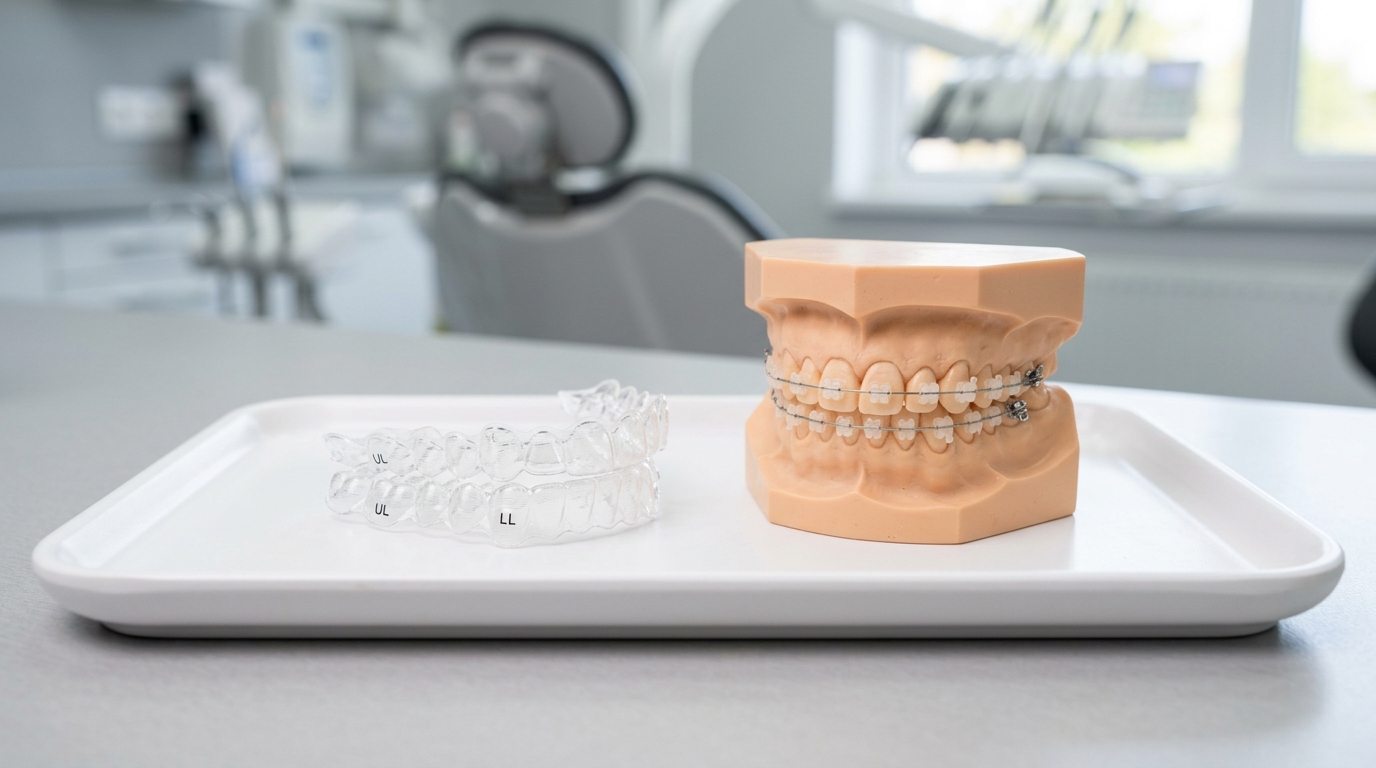
- Clear Aligners: Clear aligners (like Invisalign or custom in-house systems) are made of thin, medical-grade clear plastic. They sit flush over your teeth and are virtually invisible. This makes them the top choice for working professionals and self-conscious teens.
- Traditional Braces: Metal braces are highly visible. However, modern braces are much smaller and sleeker than they used to be. You can also opt for ceramic braces, which use clear or tooth-colored brackets to blend in with your teeth.
2. Removability and Lifestyle
- Clear Aligners: Aligners are completely removable. You take them out to eat your favorite foods, brush, and floss. This means there are no dietary restrictions—you can eat popcorn, apples, and nuts without fear. However, you must commit to wearing them for 20 to 22 hours a day for the treatment to work.
- Traditional Braces: Braces are fixed to your teeth. You cannot remove them. This means you don’t have to worry about losing them, but you must avoid hard, sticky, or chewy foods that could break the brackets or wires. Cleaning also takes more effort, requiring special floss threaders.
3. Comfort and Irritation
- Clear Aligners: Made of smooth plastic, aligners do not have sharp edges. While you will feel a sensation of tightness or pressure when switching to a new tray (which means teeth are moving!), they do not cut or irritate your gums or cheeks.
- Traditional Braces: Metal brackets and wires can cause minor cuts or irritation to your inner lips and cheeks, especially in the first few weeks. Patients often rely on dental wax to cover sharp points.
4. Treatment Complexity
- Clear Aligners: Excellent for mild-to-moderate crowding, spacing, and minor bite issues.
- Traditional Braces: Braces are highly powerful and have unmatched control over tooth movement. They are the preferred option for severe crowding, complex bite issues (like deep overbites or underbites), or rotated teeth that aligners cannot easily grip.
Making the Choice
At One Smile Dental Care, we analyze your digital impressions and dental structure during your Braces & Aligners consultation to determine if you are a candidate for clear aligners. We will guide you toward the treatment that fits your clinical needs, budget, and lifestyle.
Related Treatments
Braces & Clear Aligners
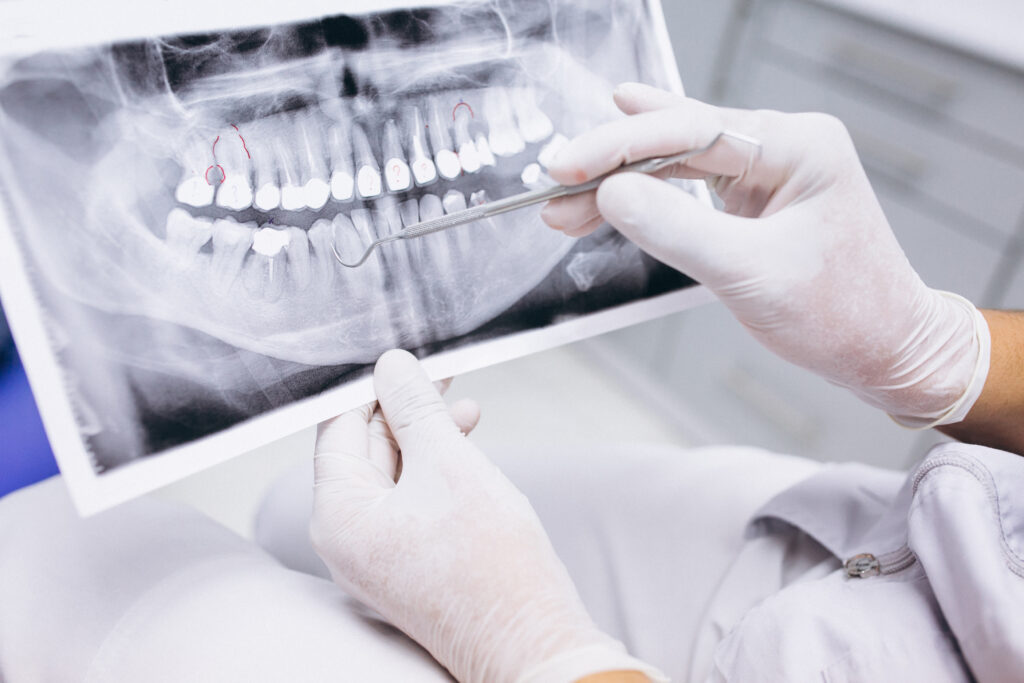
Get the straight smile you have always wanted. Choose from virtually invisible clear aligners, aesthetic ceramic braces, or traditional metal braces.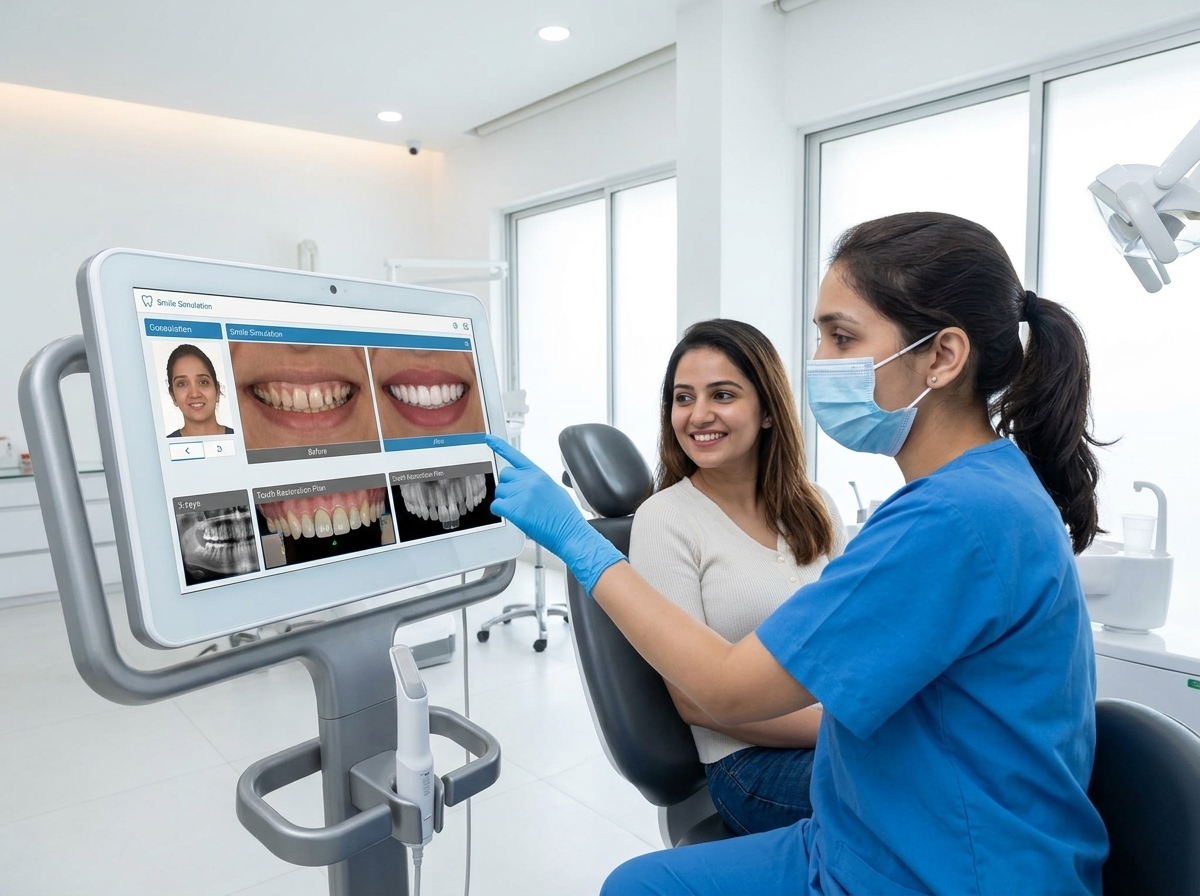
Cosmetic Dentistry
Enhance the aesthetic beauty of your smile. We correct chips, gaps, stains, and minor misalignments for a brilliant, natural-looking transformation.Concerned about your smile?
Schedule a personalized consultation with Dr. Radhika to discuss your treatment options.
Book via WhatsApp