Brushing your teeth is the foundation of good oral hygiene, yet over 70% of people brush incorrectly without realizing it. Brushing too hard, rushing through your routine, or using the wrong angle can lead to enamel loss, gum recession, and persistent plaque build-up.
Whether you want to prevent cavities, keep your breath fresh, or maintain a bright smile, mastering the right brushing technique makes all the difference.
1. Why Proper Brushing Matters
Brushing isn’t just about removing food particles—it’s about disrupting dental plaque, a sticky film of bacteria that constantly forms on your teeth.
- Prevents Cavities: Regular brushing removes plaque bacteria before they produce enamel-eroding acids.
- Protects Gum Health: Brushing along the gumline prevents gingivitis and bleeding gums.
- Prevents Staining: Removing surface stains from tea, coffee, and spices keeps your natural teeth brighter.
- Fresh Breath: Cleaning your teeth and tongue neutralizes odor-causing bacteria.
2. Step-by-Step Brushing Technique (The Modified Bass Method)
Dentists recommend the Modified Bass Technique, which focuses on cleaning both the teeth and the delicate gum margin.
- Set the 45-Degree Angle: Hold your soft-bristled toothbrush at a 45-degree angle toward your gums where your teeth meet your gumline.
- Use Short, Gentle Strokes: Move the brush back and forth in short, tooth-wide strokes. Avoid aggressive sawing motions!
- Clean All Three Surfaces:
- Outer Surfaces: Brush the front sides of all upper and lower teeth.
- Inner Surfaces: Tilt the brush vertically and make gentle up-and-down strokes behind your front teeth.
- Chewing Surfaces: Flatly brush the biting surfaces of your molars using back-and-forth motions.
- Brush for 2 Full Minutes: Spend at least 30 seconds on each quadrant of your mouth (upper right, upper left, lower right, lower left).
- Clean Your Tongue: Gently brush your tongue or use a tongue scraper from back to front to remove odor-producing bacteria.
3. Common Brushing Mistakes to Avoid
Even with daily brushing, these common mistakes can harm your oral health:
- Brushing Too Aggressively: Scrubbing hard strips enamel and causes painful gum recession. Let the bristles do the work gently!
- Brushing Right After Acidic Foods: Citrus fruits, soda, or vinegar soften your enamel temporarily. Wait 30 minutes after eating before brushing.
- Using Hard Bristles: Hard bristles irritate gums and wear down enamel. Always choose soft or ultra-soft bristled toothbrushes.
- Rushing the Process: The average person brushes for only 45 seconds. Aim for a full 2 minutes twice daily.
4. How Often Should You Brush?
You should brush your teeth twice a day:
- Morning: Right after waking up to clear overnight bacteria accumulation.
- Night: Before bedtime to ensure food particles and bacteria don’t rest on your teeth overnight.
5. When Should You Replace Your Toothbrush?
- Every 3 to 4 Months: Worn, frayed bristles lose their effectiveness and can harbor bacteria.
- After Being Sick: Replace your brush after recovering from a cold, flu, or throat infection to prevent reinfection.
6. When Should You Visit a Dentist?
While proper brushing at home is vital, it cannot remove hardened dental tartar (calculus). You should schedule a professional dental visit if you experience:
- Persistent bleeding gums while brushing or flossing.
- Tooth sensitivity to hot, cold, or sweet foods.
- Chronic bad breath that doesn’t go away.
- Visible yellowing, tartar buildup, or pain.
Related Dental Services & Treatments
- Preventive Care & Cleaning — Keep your teeth plaque-free with routine scaling and checkups.
- Teeth Whitening — Professional clinic whitening for a brilliant, sparkling smile.
- Gum Treatment — Specialized care for bleeding gums, gingivitis, and periodontitis.
- Book an Appointment — Visit Dr. Radhika Rastogi at One Smile Dental Care, Gomti Nagar, Lucknow.
Frequently Asked Questions
At One Smile Dental Care in Lucknow, professional teeth scaling and cleaning costs are transparent and affordable, generally ranging between ₹800 to ₹2,000 depending on the degree of tartar buildup.
No, professional dental cleaning is virtually painless. Our dentists use gentle ultrasonic scalers to vibrate away plaque and stains without damaging your enamel or gums.
Dentists recommend getting a professional dental checkup and scaling every 6 months to remove stubborn calculus and protect your gums.
A routine dental consultation and checkup at One Smile Dental Care is nominal and includes a comprehensive digital evaluation of your teeth and gums.
No. Once soft plaque hardens into yellow or brown tartar (calculus), brushing cannot remove it. Only professional ultrasonic dental cleaning at a clinic can safely remove tartar.
Brushing removes surface food stains, but it cannot change the natural internal shade of your teeth. For dramatic whitening, explore our professional teeth whitening treatments.
Related Treatments
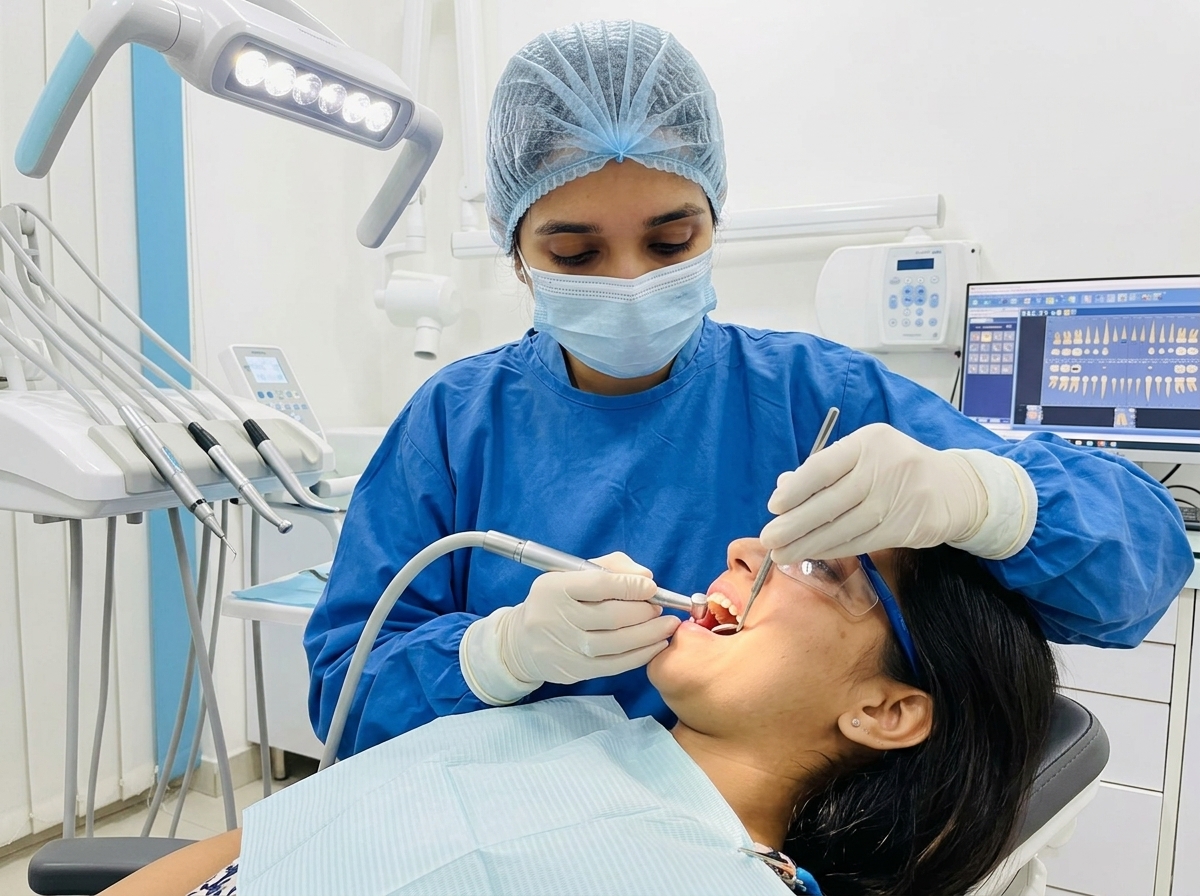
Preventive Care & Cleanings
Prevent gum disease, cavities, and bad breath. Routine cleanings, scaling, and comprehensive exams are the foundation of lifetime oral health.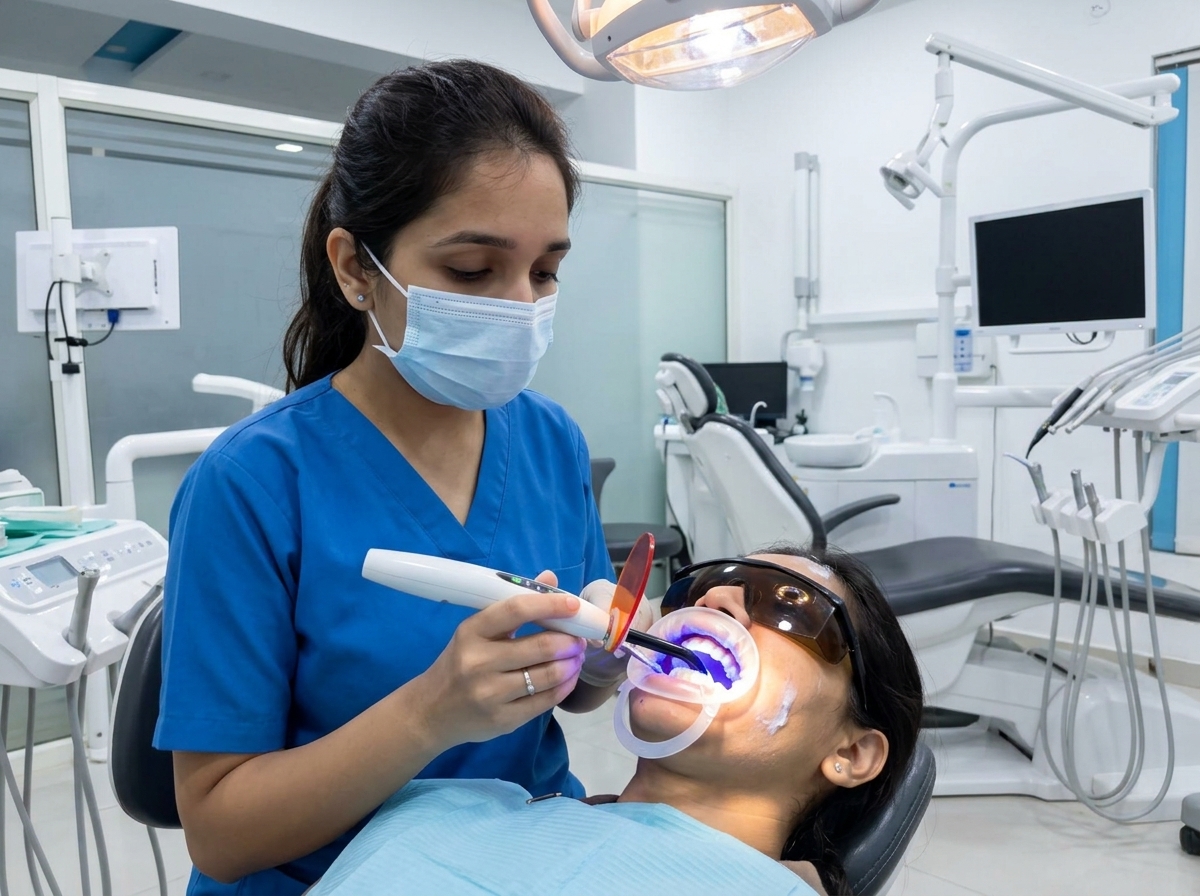
Professional Teeth Whitening
Get a dramatically brighter smile safely and quickly. Our professional in-office laser whitening removes deep stains and discoloration.
Gum Disease Treatment (Periodontics)
Treat bleeding gums, bad breath, and recession. Deep cleaning (scaling and root planing) restores health to the tissues that support your teeth.Concerned about your smile?
Schedule a personalized consultation with Dr. Radhika to discuss your treatment options.
Book via WhatsApp